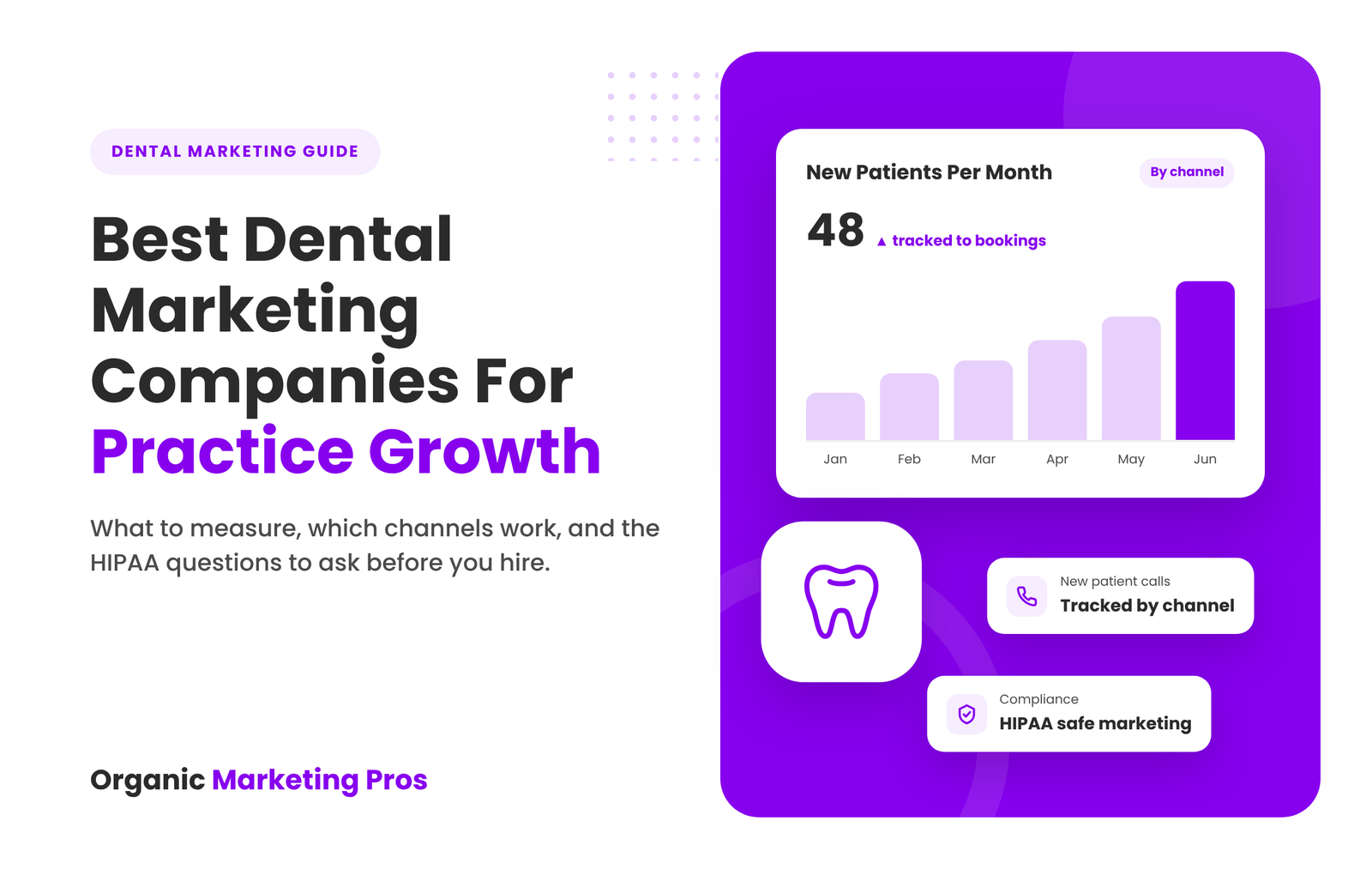
The best dental marketing companies are the ones that can show you new patients, not just clicks: they track calls and bookings back to each channel, know the HIPAA rules that apply to reviews, ads and website tracking, and give you full ownership of your accounts. Specialization in dentistry helps, but it matters less than transparent reporting and a plan built around how patients in your area actually choose a dentist.
For most practices, dental marketing comes down to four channels: your Google Business Profile, your website, paid search and reviews. Below is what each should deliver, the types of companies that sell it, the compliance questions to ask, and how to compare proposals so you pick a partner rather than a vendor.
What Dental Marketing Should Actually Deliver
Traffic and rankings are inputs. What a practice needs is booked appointments from the right patients, at a cost that makes sense for the treatments you want more of. A good dental marketing company reports against that, every month.
The Numbers To Ask Every Company For
| Metric | Why it matters |
| New patient calls and form bookings, by channel | Shows which channels actually produce patients |
| Cost per new patient | The single best number for comparing channels and companies |
| Calls answered vs missed | Marketing can’t fix a phone nobody picks up; good agencies flag it |
| Treatment type of new patients | Implant and Invisalign leads are worth more than cleanings |
| Review count and average rating, by location | Drives local visibility and trust |
The Types Of Dental Marketing Companies
“Dental marketing company” covers very different setups, and the right type depends on your size and goals.
| Type | Best for | Strengths | Watch for |
| Dental only agency | Practices that want templates and processes built for dentistry | Knows dental terms, treatments and patient journeys | Cookie cutter websites and content shared across many clients |
| Healthcare agency | Practices that want compliance experience plus broader skills | HIPAA awareness, medical content standards | May be less specific to dental treatments |
| Full service digital agency | Groups that need SEO, ads, web and content together | One team, one report | Dental may be one of many industries; ask for healthcare examples |
| Local SEO or PPC specialist | Practices with one clear gap | Depth in one channel | You coordinate everything else |
| Software platform | Practices with an in house marketer | Reviews, reminders and reporting at low cost | A tool doesn’t write pages or run campaigns |
The Dental Marketing Channels That Bring New Patients
Google Business Profile And Local Search
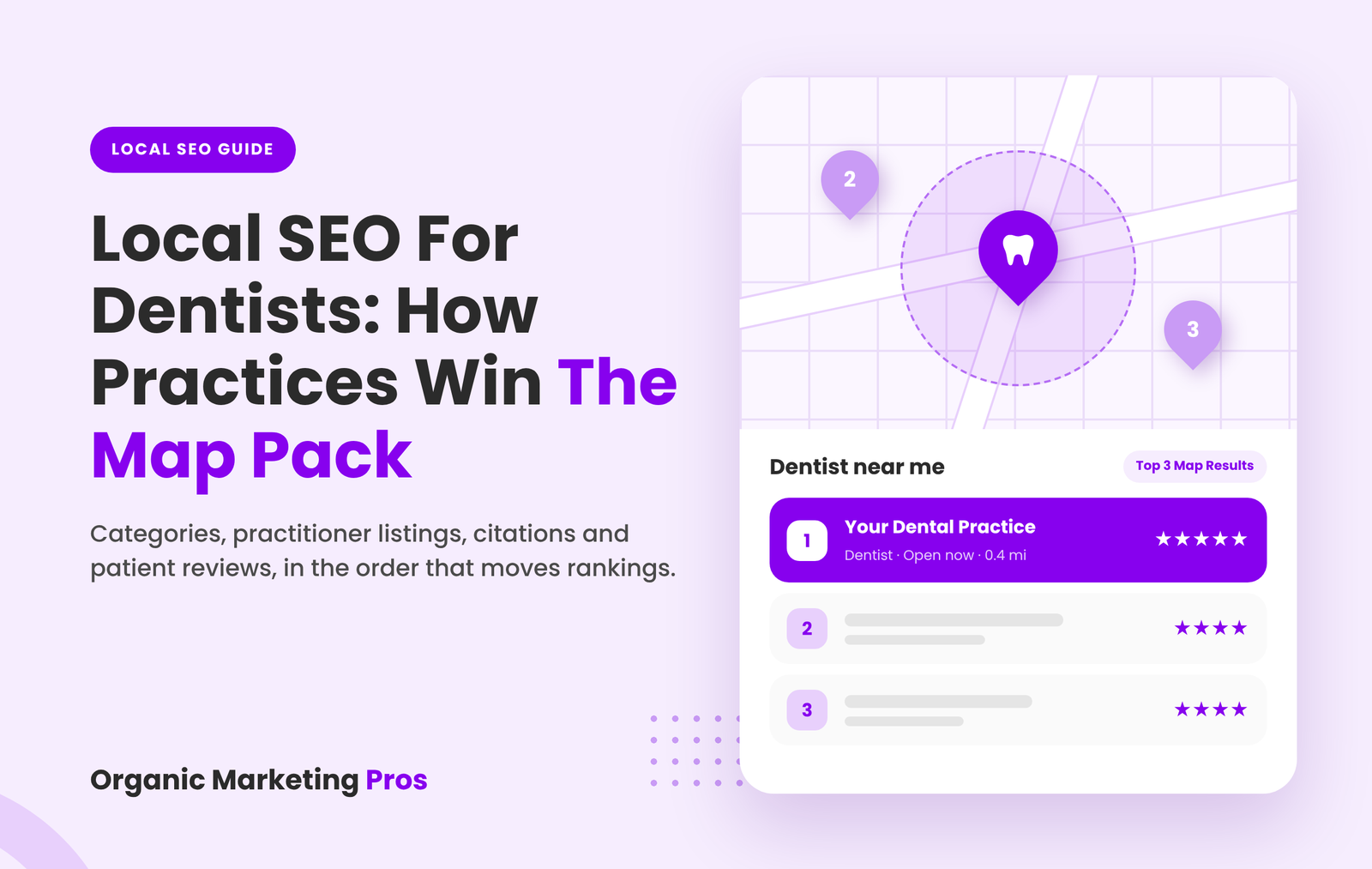
Most patients look for a dentist near them, so the map pack is usually the biggest source of new patient calls. Google says local results are based mainly on relevance, distance and prominence, and that more reviews and positive ratings can help. Category choice, accurate hours, real photos and steady reviews matter more than anything clever. This is the core of local SEO services, and our guide to local search optimization walks through each step.
Your Website And Dental SEO
Each main treatment needs its own page: implants, Invisalign, emergency dentistry, cosmetic work, pediatric care. Each page should answer what patients actually ask (cost ranges, insurance, recovery, who performs it) and make booking easy on a phone. The Google ranking factors that matter for any business apply here, and a proper SEO audit finds the technical problems that hold dental sites back. For practices in competitive cities, specialist healthcare SEO or broader SEO services are where most long term patient growth comes from.
Dental PPC
Paid search fills the gap while organic visibility builds, and it’s the fastest way to promote high value treatments. Done well, dental PPC targets specific services and locations, sends each ad to a matching landing page, and tracks calls as conversions. It’s worth running through a team that does PPC management for healthcare, because the rules differ.
Google’s Rules For Health Ads
Google’s personalized advertising policy restricts targeting people based on health conditions, as this overview of Google’s health ad rules explains. In practice, that means dental remarketing has to be careful: ads should promote your services, not imply you know a person’s condition. Search campaigns built on service keywords (“dentist near me”, “dental implants [city]”) are the safer core.
Reviews And Reputation
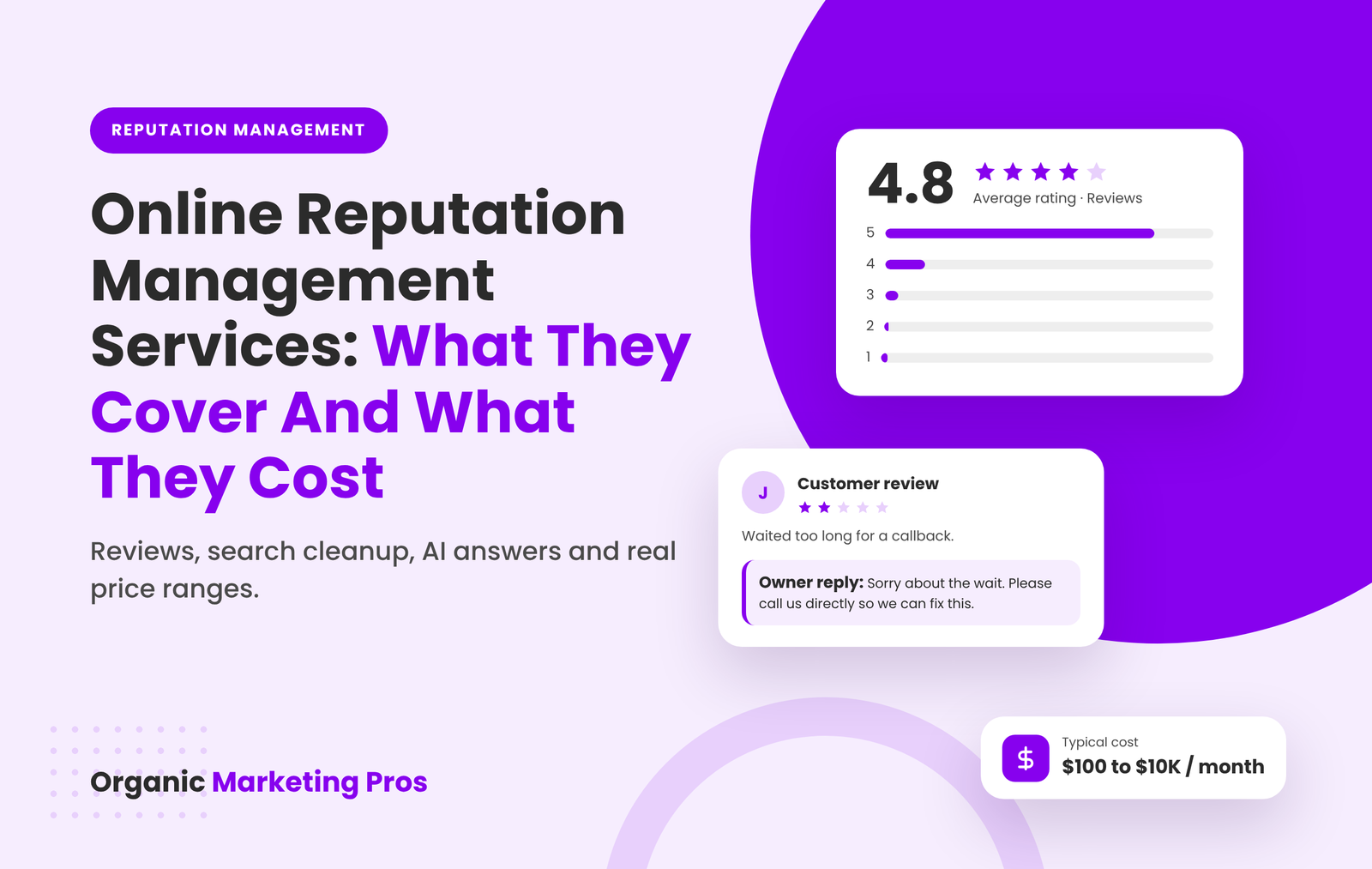
Reviews influence both rankings and which dentist a patient calls. Ask every patient, reply to every review, and never buy or write them. Our guide to online reputation management services covers what review management should include and what it costs.
The Review Reply Mistake That Cost Two Practices
Replying to a negative review with details of the patient’s treatment is a HIPAA problem. In 2019, a Dallas practice paid $10,000 to settle an HHS complaint after its Yelp replies disclosed a patient’s name, treatment plan, insurance and cost details. In 2020, a California practice paid $23,000 for similar replies. Even confirming someone is a patient can be a disclosure. Replies should thank the reviewer and invite them to call the office, nothing more.
Content And AI Search
Patients increasingly ask ChatGPT and Google’s AI Overviews questions like “how much do dental implants cost” or “best dentist near me for anxious patients.” Clear, accurate treatment pages and consistent information across your profiles are what those answers draw on. Content marketing builds the pages; AI SEO services make sure AI tools describe your practice correctly. Our guide to evaluating a GEO agency explains what real AI search work looks like.
HIPAA Questions Every Dental Marketing Company Should Answer
A dental marketing company handles data close to patient information: call recordings, form submissions, booking data, review replies. These are the questions that separate a careful partner from a risky one. This isn’t legal advice; check specifics with your compliance advisor.
Tracking Pixels On Booking Pages
In March 2024, HHS’s Office for Civil Rights updated its guidance on online tracking technologies, saying tracking tools can’t process protected health information unless there’s a business associate agreement or patient authorization. In June 2024, a Texas federal court vacated part of that guidance covering public, unauthenticated pages, but the rules still apply wherever tracking touches patient information. Ask the company which pixels run on your booking, form and patient portal pages, and why.
Business Associate Agreements
If a company or tool will handle protected health information, such as call recordings, booking details or form data, ask whether it will sign a business associate agreement. A company that doesn’t know what one is shouldn’t be handling your patient data.
How To Compare Dental Marketing Proposals
Compare proposals on the same points so you’re not choosing on price or sales skill alone. The six point scorecard in our guide to choosing an SEO company for a small business works well for dental marketing too.
10 Questions To Ask Before You Sign
| Question | A good answer | A red flag |
| 1. How will you track new patients by channel? | Call tracking and form tracking tied to bookings | “We’ll report traffic and rankings” |
| 2. What is our cost per new patient today? | They work it out with you in month one | They can’t say how they’d measure it |
| 3. Who owns the website, ads account and Business Profile? | You do, in writing | They keep them if you leave |
| 4. How do you handle review replies? | Privacy safe templates, approval rules | “We reply for you” with no guidelines |
| 5. Which tracking tools run on booking pages? | A clear list and the reasoning | “Standard setup” |
| 6. Will you sign a business associate agreement? | Yes, where they handle patient data | “We don’t need one” |
| 7. Can we see dental or healthcare results? | Examples with timeframes | Only vague testimonials |
| 8. Is our website unique to us? | Built for your practice | A template shared with nearby competitors |
| 9. What happens in the first 90 days? | Audit, tracking, fixes, priorities | “Results in 30 days, guaranteed” |
| 10. What are the contract terms? | Clear notice period | Long lock in, exit fees |
Red Flags
- Guaranteed rankings or a set number of new patients. No one can promise either.
- Exclusive territory claims you can’t check. Ask how many practices in your area they work with.
- Fake or “seeded” reviews. These break Google’s rules and the FTC’s ban on fake reviews.
- Accounts in their name. If they own your ads account or profile, leaving gets expensive.
- Reports without patient numbers. Clicks alone don’t pay for chairs.
What Dental Marketing Costs
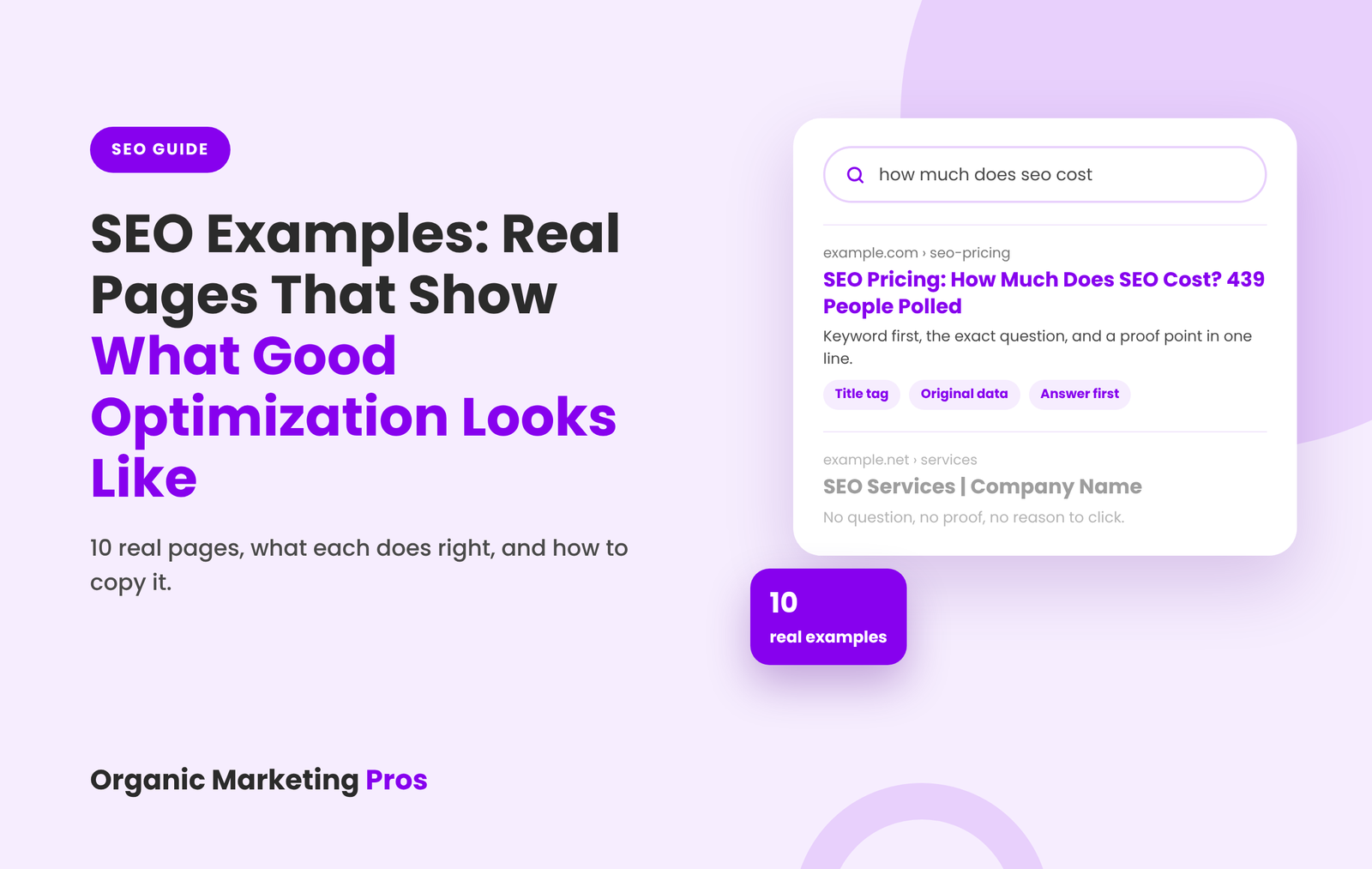
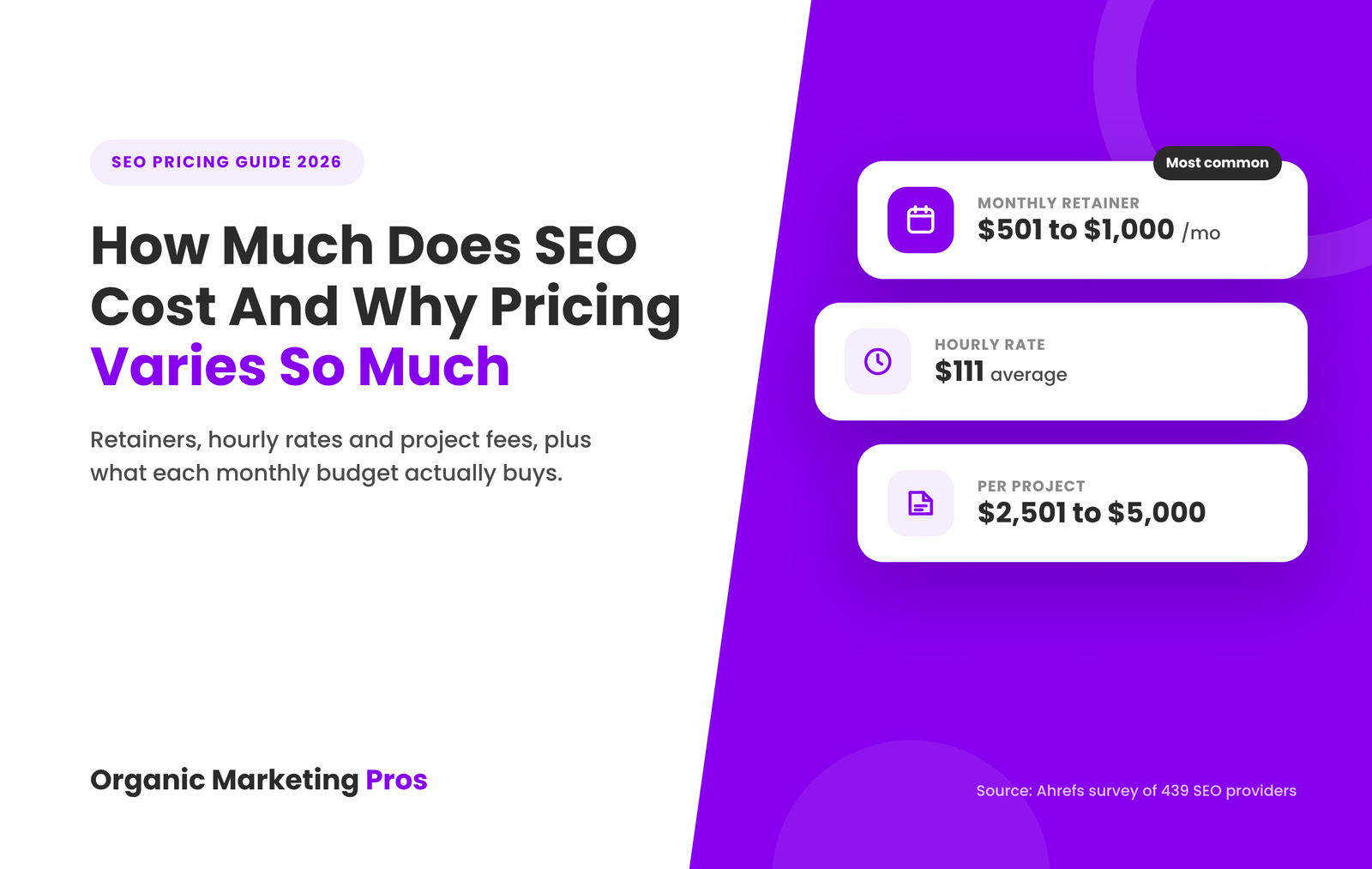
Prices vary widely with the number of locations, channels and how competitive your city is. For SEO alone, the Ahrefs pricing survey found most providers charge $2,000 a month or less, with $501 to $1,000 the most common band, though agencies averaged more. Paid search adds the ad budget itself on top of management fees. Compare quotes by what’s included per location and by the cost per new patient you can expect, not by the monthly fee alone. Our guide to choosing a local SEO company covers how pricing changes for multi location practices.
A Worked Example: Choosing For A Two Location Practice
A hypothetical, with illustrative details. Say a two location practice wants more implant patients and has three proposals: a dental only agency offering a template website and social posts, a full service agency offering SEO, PPC and content with call tracking, and a PPC specialist offering implant campaigns only.
If the practice’s website is weak and its reviews are thin, the PPC specialist will pay for clicks that don’t convert. The dental only agency may move fast but gives the same website as competitors nearby. The full service option is likely the better fit if it shows call tracking by location, privacy safe review processes, and a cost per new patient target, even at a higher fee. The right answer changes if the practice already has a strong site: then the PPC specialist could be the best value.
Where Organic Marketing Pros Fits
We’d rather you put us through the 10 questions above than take our word for it. Organic Marketing Pros works with healthcare practices on local search, SEO, PPC and content, with reporting built around new patients. You can see how we approach the sector on our healthcare industry page, review our case studies, and meet the team. If you’d like your own numbers reviewed, send us your practice details.
Frequently Asked Questions
Q1: What Does A Dental Marketing Company Do?
It helps a practice attract and book new patients through local search, SEO, paid search, reviews, content and social media, and reports which channels produce patients.
Q2: Is A Dental Only Agency Better Than A General Agency?
Not automatically. Dental experience helps, but transparent tracking, HIPAA awareness and ownership of your accounts matter more. Ask any agency for healthcare examples.
Q3: How Long Does Dental Marketing Take To Work?
Paid search can bring calls within weeks. Local search and SEO usually take three to six months to show steady growth, depending on competition.
Q4: Is Dental Marketing HIPAA Compliant By Default?
No. Review replies, call recordings, forms and tracking tools can all involve patient information. Ask how each is handled and whether a business associate agreement is needed.